The 2026 Consumer: Why Traditional Personas No Longer Work
Jan 2026
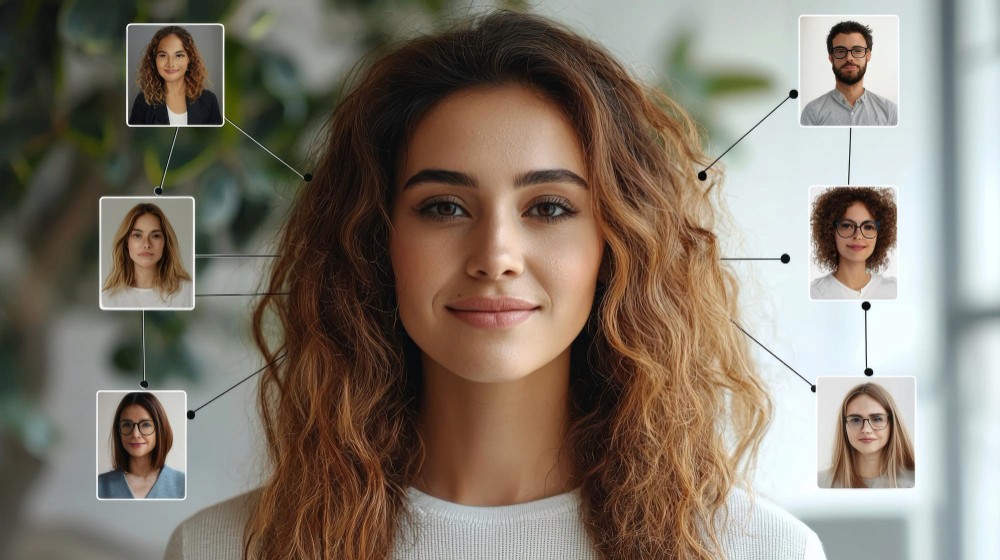
Imagine you are at a party where everyone is constantly changing outfits, interests, and even languages… and you try to guess who everyone was last year. That’s what traditional personas feel like in 2026. Long gone are the days when a static customer profile, penned once and shelved, could reliably guide marketing, product, or CX decisions rooted in real consumer intelligence and audience insights.
We are in 2026, and modern consumers behave like shapeshifters, surfacing at dozens of digital touchpoints, shifting preferences by context, time, or even mood. However, the problem is that traditional persona models freeze these dynamic humans into a snapshot, usually based on internal assumptions and historical data rather than real-time consumer modeling or behavioral insights. That means by the time you launch a campaign, your traditional persona will already be outdated.
Many traditional personas fail not because of bad intent, but because they are built with assumptions instead of real time behavioral intelligence and behaviour-led consumer insights. In fact, industry research shows that outdated persona frameworks often describe who buyers are rather than how and why they make decisions, leading to misaligned strategies and wasted spend. When brands enrich personas with verified data and continuous insight systems, conversion rates can be up to 73% higher than with traditional personas alone.
This blog isn’t another rehash of “personas are dead.” It is an alarming wake-up call: the consumer has evolved, and your traditional persona-led approach to customer understanding must too. Let’s explore why the old model fails, and what 2026 demands instead.
The Cracks in the Old Persona Playbook
At their core, traditional personas bundle demographic and attitudinal data into tidy profiles: age, job title, interests, preferences. But the digital era has obliterated the idea that demographics alone predict behaviour. Today, people hop between channels, contexts, and moods, often within minutes, creating evolving customer decision patterns that static personas cannot capture.
What’s more, many legacy personas rely on internal bias, gut feel, and stale datasets rather than modern consumer research methods or real-time consumer intelligence frameworks that reflect interactions in real time. That is not just an academic problem; it is also costly. As companies hold onto these outdated traditional persona archetypes, they make decisions based on who they think their customers are, not what customers actually do, ignoring real consumer decision signals and behavior analytics.
Another core flaw? Many teams still build personas from historical data, e.g., past purchases or questionnaires conducted ages ago. Today’s consumer context changes so fast that those past patterns are often irrelevant by the time you act on them. Without real time insights, continuous customer insight systems, and adaptive customer frameworks, traditional personas become little more than PowerPoint props, beautiful to look at but useless in execution.
The result is wasted marketing spend, misaligned experiences, and lost trust. In 2026, brands that cling to old traditional persona playbooks are actively choosing to misunderstand their customers.
Meet the 2026 Consumer: Complex, Fragmented, Unpredictable
If 2016’s consumer was segmentable, 2026’s is fluid. Modern consumers don’t behave the same way across channels, time of day, or purchase context. One moment, they are window-shopping on TikTok; the next, they are binge-reading reviews on Reddit; then closing purchases on mobile apps. These multi-modal journeys break all assumptions traditional personas make, especially the idea that one traditional persona can represent coherent behavior across all touchpoints without cross-channel consumer insight mapping.
Then there’s privacy. With third-party cookies disappearing and tracking getting stricter by the month, the rug has been pulled out from under the data brands once relied on to build and maintain traditional personas and static customer segmentation models.
The consumer domain is more fragmented, with data scattered across platforms, devices, and channels. Instead of clean, centralized insights, businesses face complex patterns that require contextual consumer behavior analysis and next-generation customer understanding, versus static profiles.
A fashion brand might assume Millennial moms prefer email offers and Facebook ads. But what if many in this group are discovering trends via Instagram Reels and converting directly on mobile apps? This is a behavior a traditional persona wouldn’t capture. That dissonance between assumed and actual behavior is where traditional personas fail most spectacularly.
Why Data Fragmentation Kills Traditional Personas
The elephant in the room is data fragmentation. And it’s a major reason traditional personas are breaking down. If we look at a consumer’s digital footprint - website visits, app interactions, search patterns, social engagement, support tickets, feedback forms, purchase paths… they are all living in separate systems. Traditional personas often rely on aggregated snapshots from a few of these sources, but never the full, comprehensive picture.
What this means in practice: your traditional persona might say “Tech Enthusiast, Age 30–40,” but won’t ever reveal that this person abandoned cart after a poor mobile experience, or that they were swayed by an influencer review last night. The insights exist, but only in real-time behavioural data, and Market Xcel’s Data Myner technology solution bridges that very gap. You can unlock consumer Journeys with real-time in-App data.
It is a fact that modern consumers are defined by moments, not by static traits. And static personas flatten those moments into broad assumptions, losing customer context and decision intelligence.
Forrester states that 95% of business leaders believe success hinges on timely, accurate, accessible data, yet traditional persona creation still locks insights into static documents that rarely inform daily workflows. That is like having gold bars stored in a vault no one can open.
In short, data fragmentation creates a reality gap between what traditional personas claim and what consumers actually do.
The Rise of Dynamic and AI-Driven Consumer Understanding
If traditional personas are snapshots, AI-driven models and dynamic segmentation are movies. Instead of frozen profiles, cutting-edge brands are turning to AI-powered customer insights platforms that update continuously, integrating behaviour, intent, and real-time signals to learn as consumers evolve.
AI-based segmentation goes beyond age and location to analyze things like engagement patterns, search behaviour, purchase intent, churn risk, and consumer signals. This means consumers are grouped not by who they are in a traditional persona, but by how they behave now using behavior analytics.
Imagine two users, both 30–35 years old: one actively watching product videos and signing up for webinars; the other quietly browsing occasionally. Traditional personas might treat them the same, but AI knows they are different segments today through predictive consumer behavior analytics.
This evolution isn’t theoretical. AI-driven customer segmentation is already enabling dynamic, behaviour-based segments that update continuously as real-time data flows in, allowing marketers to adapt campaigns instantly instead of relying on fixed audience buckets. AI analysis of behaviour and preferences helps brands refresh segments near real time, which improves targeting precision and keeps campaigns aligned with shifting customer interests.
Brands that embrace these systems can anticipate changes rather than react too late, and that’s the competitive edge in 2026.
The Future: From Traditional Personas to Living Understanding
The next evolution of personas isn’t a new template or a smarter slide deck. It’s a shift in how brands understand people altogether using next-gen audience intelligence. Instead of freezing customers into fixed profiles, leading organizations are moving toward living customer profile frameworks built on continuous insight systems, ones that change as behaviour changes.
These modern profiles aren’t locked to a moment in time. They update as customers interact with products, content, and channels. Preferences shift. Context changes. Signals emerge from everywhere, browsing behaviour, purchase patterns, support conversations, social sentiment. The understanding evolves with them through real time behavioral intelligence.
Crucially, this isn’t about replacing human insight with automation. It’s about scaling it. These living models connect insights across teams, informing marketing campaigns, shaping product decisions, and guiding experience intelligence in real time. They surface patterns humans would miss, and challenge assumptions teams didn’t realise they were making within traditional persona thinking.
Traditional personas still have a role, but only as a starting point. On their own, they’re incomplete, too static for a world defined by constant change. The brands that will win in 2026 aren’t the ones with the most polished traditional persona, but the ones that treat consumer understanding as an ongoing discipline, not a one-off exercise.
Build Next-Gen Consumer Profiles in 2026 With Market Xcel
So how do you build consumer profiles that actually work in 2026? The answer isn’t about refining templates; it’s about building systems that understand people in motion beyond the traditional persona. Market Xcel, one of India’s largest integrated market research firms, helps brands unify human needs, behaviours and emotions into actionable insights using future-ready consumer research and deep market intelligence, making this approach possible.
1. Continuous Data Integration
Consumer understanding can no longer live in silos the way it does in a traditional persona. Signals from websites, apps, social platforms, support channels and feedback loops must be brought together into a unified model. Market Xcel’s expertise in comprehensive data collection and integration ensures these signals are not lost; they become insights through cross-channel consumer insight mapping.
2. Behaviour and Intent Focus
The future of profiling prioritizes what consumers do now over who they were historically in a traditional persona. At Market Xcel, we combine rigorous quantitative data with rich qualitative insight, layering contextual behavior analysis with motivation to deliver a deeper understanding of consumers.
3. AI and Automation
Machine learning tools are essential for continuously updating segments and signals in real time. When paired with human judgment from seasoned researchers, , these tools help brands see patterns earlier and respond faster.
4. Human Validation
Data without context is noise. Insights that come from interviews, social listening, community engagement and expert interpretation reveal the why behind behaviour and often uncover strategic opportunities that purely algorithmic models miss. This blend of tech and human intelligence is where Market Xcel adds real value beyond traditional personas.
Template-driven profiles miss emotional nuance, while real consumer conversations reveal true motivation. In 2026, the goal isn’t better personas, it is living understanding that informs every decision.
Conclusion: Partner for the New Consumer Reality
The future of consumer understanding is fluid, adaptive, and continuous. Traditional personas, static, biased, and siloed, don’t reflect the reality of today’s behaviour-driven consumers and digital consumer trends.
In 2026, success means building models that learn, evolve, and respond to real-time signals instead of relying on a traditional persona. If you want your marketing, product, and CX to land in a world that changes faster than your last persona update, it’s time to move past static profiles. Invest in insight frameworks that capture context and motivation, and partner with Market Xcel that combines data science with real human insight.
Because your consumers aren’t static, and your insights shouldn’t be either.