12 Wellness Trends in India 2026 Shaping Consumer Behavior
Apr 2026
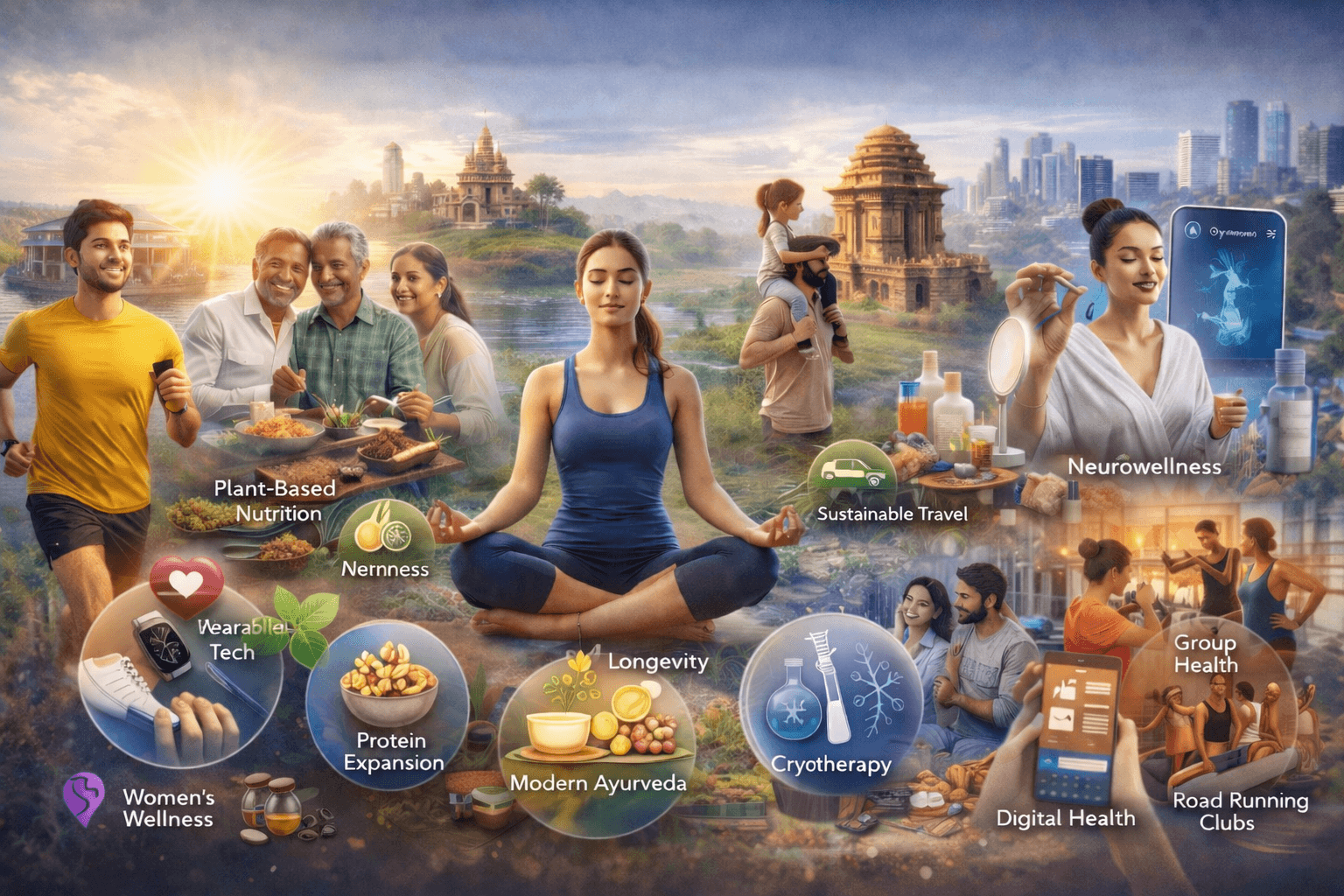
India's wellness consumer has changed. Most wellness businesses haven't caught up. This is exactly why wellness trends in India are becoming impossible for brands to ignore.
According to the Global Wellness Institute, India is now the 7th largest wellness economy globally, and the second fastest growing among the world's top 25 markets, expanding at 11.3% annually from 2019 to 2024, nearly double the global average of 6.2%. But headline rankings are the wrong number to obsess over. The more interesting signal is behavioral: Indian consumers are no longer buying wellness products. They are building wellness systems. Gym memberships, diet programs, and supplement stacks that once operated in isolation are being evaluated as parts of a connected lifestyle architecture, reflecting deeper consumer behavior insights and a broader holistic wellness consumer behavior shift in India.
That shift is creating extraordinary opportunity in some sub-segments, and quiet irrelevance in others.
Here is where the market is moving in 2026, and what it means for brands, investors, and operators trying to build in this space across the evolving domain of wellness trends in India.
1. The Intensity Era Is Over. Longevity Is the New Performance Metric
For years, India's fitness culture borrowed wholesale from American gym culture; heavier, faster, more. That narrative is fracturing. Pilates studios, mobility training, and functional movement formats are growing faster than traditional gym memberships in Tier 1 cities. The American College of Sports Medicine ranks functional fitness and mobility training among the top global fitness trends, and India is tracking closely, reinforcing longevity focused fitness trends in India in 2026.
The underlying driver is structural. India has one of the largest sedentary working populations in the world. Desk-bound professionals in Bengaluru, Mumbai, and Gurugram are not looking for more intensity… they are looking for relief from the damage their daily lives are already inflicting. A back that doesn't hurt. Shoulders that work. The ability to sit on the floor without wincing.
What this means for brands: Premium mobility studios, physiotherapy-integrated fitness models, and digital programs built around functional longevity are entering a segment with almost no established competition. The consumer demand is there. The supply hasn't arrived yet, especially within emerging wellness trends in India.
2. Wearables Have Created a New Kind of Consumer, And They're Harder to Fool
The American College of Sports Medicine has ranked wearable technology as the number one global fitness trend for nearly a decade. In India, that dominance has a sharp commercial edge: the country has scaled wearables penetration rapidly on affordability - boAt, Noise, and Realme built tens of millions of users on accessible hardware. What they also did, unintentionally, was create a population that now tracks sleep, heart rate, steps, and stress levels daily, highlighting the growing wearable technology impact on wellness consumers in India.
That has a downstream consequence most wellness brands haven't fully reckoned with - the quantified consumer is a skeptical consumer. When someone can see that their resting heart rate spiked after a bad week, or that their HRV dropped when they skipped recovery, generic wellness claims start sounding hollow. The next inflection is happening at the premium end, devices like Ultrahuman's Ring AIR and continuous glucose monitors are finding an audience among health-optimizers willing to pay significantly more for personalized data.
What this means for brands: Personalization is no longer a feature; it's the baseline expectation. Brands that cannot speak to the data layer consumers are already generating will lose relevance faster than they expect, which is a defining part of personalized wellness and data driven health insights and the larger shift in wellness trends in India.
3. Protein Is a Mainstream Conversation, And the Market Is Still Underserved
India has a documented protein problem. A 2017 survey found that 73% of Indian diets are protein deficient, with 93% of Indians unaware of their daily protein requirements. That statistic predates the current wave of awareness; the gap between what Indians consume and what the body needs is well-established, and it is now entering mass consumer consciousness, driven by protein consumption trends and nutrition awareness in India.
India's protein and nutraceutical D2C segment is growing rapidly, with brands like The Whole Truth Foods, Cosmix, thefunclab, OZiva, Yoga Bar, and MuscleBlaze carving distinct positioning, but the category remains significantly underpenetrated relative to the size of the addressable market.
What's shifting is the consumer profile. Protein is no longer just a gym supplement. It is being sought by urban women managing energy and hormonal health, by aging professionals focused on muscle retention, and by parents evaluating their children's nutrition. The use case has expanded dramatically.
What this means for brands: The opportunity is not in another whey protein SKU. It is in protein formats that fit Indian eating patterns, regional flavors, cooking-compatible formats, and products that integrate with traditional meals rather than replacing them, which is central to current wellness trends in India.
4. India Is Sleep-Deprived. The Category Is Just Beginning
A 2019 Fitbit study across 18 countries found India to be the second most sleep-deprived nation globally, averaging 7 hours and 1 minute of sleep per night, with the lowest REM sleep duration in the world at just 77 minutes. That headline number actually understates the problem: a 2024 LocalCircles survey found that 61% of Indians get less than 6 hours of uninterrupted sleep, a figure that has risen from 50% in 2022.
The Global Wellness Summit identifies sleep restoration as a critical component of neurowellness, linking poor sleep to hormonal disruption, chronic stress, cognitive decline, and reduced immune function. In India, this conversation is moving from niche wellness circles into mainstream awareness, driven by wearables data and growing health literacy, making sleep health and wellness market trends one of the most important wellness trends in India today.
The sleep economy in India is nascent but accelerating, spanning mattresses and sleep technology (Wakefit, The Sleep Company), supplements (melatonin, magnesium, ashwagandha formulations), wearable sleep tracking, and behavioral programs. The brand that can credibly own "better sleep for India" as an integrated solution has significant white space ahead.
What this means for brands: Sleep is structurally underpriced as a wellness category in India. Consumer willingness to invest is growing faster than the supply of credible, science-backed solutions.
5. Recovery Is Becoming a Product, Not an Afterthought
Recovery has historically been what you did between workouts. That framing is changing. Recovery is increasingly being positioned, and purchased, as a wellness category.
Cold plunge facilities, infrared saunas, compression therapy, and breathwork sessions are appearing inside premium gyms, boutique studios, and as standalone service offerings in metro cities. The American College of Sports Medicine highlights recovery practices, including breathwork, stretching, and cold exposure, as part of holistic wellness routines that are gaining mainstream traction globally. This is aligning strongly with recovery and mobility fitness trends in urban India.
The broader shift is conceptual: Indian consumers are beginning to understand that adaptation happens during recovery, not during effort. That reframing unlocks an entirely new purchase motivation.
What this means for brands: Recovery is one of the few wellness sub-segments in India where premium pricing has almost no ceiling. Consumers who have internalized the value of recovery are not price-sensitive about it, further validating these emerging wellness trends in India.
6. Mental Health Has Outgrown Therapy. Neurowellness Is What's Next.
A landmark study published in The Lancet Psychiatry in December 2019 estimated that 197.3 million Indians, roughly 1 in 7 people, were living with mental disorders as of 2017. The contribution of mental disorders to India's total disease burden doubled between 1990 and 2017. This is among the largest unaddressed mental health gaps in the world.
But the trend worth watching in 2026 is not traditional mental health services, it is neurowellness. Where mental health focused on symptoms and diagnosis, neurowellness focuses on nervous system regulation, cognitive performance, and stress physiology. It asks not "what is wrong?" but "how do I perform better under pressure?" This framing is gaining traction among urban professionals experiencing high burnout, and India has a structural advantage: yoga, pranayama, and meditation are cultural assets that neurowellness can validate and modernize through science, making neurowellness and mental health trends in India especially relevant.
What this means for brands: The neurowellness consumer in India is educated, high-income, and deeply dissatisfied with generic stress-management content. Credibility, not marketing spend, is the primary acquisition lever. This is one of the clearest wellness trends in India for premium brands.
7. Longevity Has Gone from Philosophy to Purchase Intent
Two years ago, longevity was a conversation for biohackers and Silicon Valley executives. In 2026, it is influencing purchasing decisions among upper-middle-class Indians in their 30s and 40s who are watching their parents manage preventable lifestyle diseases and deciding they want a different trajectory.
Longevity and healthspan as defining themes for 2026, driven by growing evidence around biomarker tracking, preventive diagnostics, and lifestyle-based disease reversal. In India, this is showing up as rising demand for comprehensive health assessments, metabolic testing, and long-term wellness planning, all of which signal the rise of the preventive healthcare and longevity market in India.
The longevity economy in India is valuable not just as a standalone category but as a strategic framework, the narrative that connects fitness, nutrition, sleep, and preventive medicine into a unified system.
What this means for brands: A brand or clinic that can articulate a genuine longevity protocol, not just a menu of tests, is building a client relationship with a 20–30-year horizon. That is an entirely different business model from transactional wellness, and one that sits at the center of future wellness trends in India.
8. Women's Health Is India's Most Underserved Wellness Market
A 2024 multi-center study published in JAMA Network Open found PCOS prevalence in India ranging from 7.2% to 19.6% among women of reproductive age, depending on diagnostic criteria, with rates significantly higher in urban areas. Urban estimates from some studies reach as high as 22.5%. Despite this, almost 70% of women with PCOS worldwide remain undiagnosed, and India's healthcare system is particularly underequipped to manage it. Beyond PCOS, perimenopause, endometriosis, and postpartum recovery remain areas where medical guidance is inadequate, and consumer products are nearly non-existent.
Women's health is one of the fastest-growing investment areas in the global wellness economy. In India, startups like Nua, Elda Health, and Carmesi are beginning to build in this space, but category penetration remains extremely low relative to the size of the opportunity, underscoring women's health wellness trends in India in 2026.
What this means for brands: Women's health in India is not a niche. It is a category waiting to be built. Brands that earn trust early, through specificity, clinical credibility, and genuine community, will have a structural advantage that is extremely difficult to replicate. Among all wellness trends in India, this may be one of the most underserved.
9. Run Clubs Are a Business Signal, Not Just a Social Trend
The explosion of run clubs across Indian cities, from Bombay Running Club to Delhi Runners Group to dozens of hyperlocal groups in Bengaluru, Hyderabad, and Pune, is often covered as a social phenomenon. It is also a market signal, and a strong marker of community driven fitness trends and run clubs in India.
The Tata Mumbai Marathon 2024 saw nearly 56,000 on-ground participants, with the full marathon category crossing 11,000 finishers for the first time in the event's history, a signal of how deeply running culture has matured.
Underneath these headline events is a daily community infrastructure, group runs, training programs, nutrition discussions, and gear conversations, that represents a highly engaged, relatively affluent consumer cohort that brands are only beginning to recognize as a distribution channel.
What this means for brands: Community is not a marketing tactic. It is the product. Brands that build genuine community ownership, rather than sponsoring from the outside, will generate retention and advocacy that paid media cannot replicate, especially in the next phase of wellness trends in India.
10. Functional Beverages: The Convenience Premium Is Real
India's beverage market has historically been dominated by sugary soft drinks, chai, and packaged juices. That domain is shifting as a growing segment of consumers evaluates beverages not just for taste but for functional benefit.
Probiotic drinks, protein shakes, adaptogen-infused teas, and electrolyte beverages are growing rapidly in urban markets. The Global Wellness Institute identifies healthy eating and nutrition as one of the four sectors driving the most growth in top wellness markets globally. Brands like Paper Boat, Raw Pressery, and a new cohort of D2C entrants are building in this space, with a critical insight: Indian consumers are willing to pay a premium for health benefits when delivered through a format that fits their existing daily routine, reflecting functional beverages market trends in India wellness.
What this means for brands: The functional beverage opportunity in India is not about replicating Western product formats with a turmeric sprinkle. It is about building products genuinely rooted in Indian taste and formulation, while meeting the clinical credibility bar a more informed consumer is beginning to demand. That is increasingly visible across wellness trends in India.
11. Ayurveda Is Being Rebuilt for a Generation That Wants Evidence, Not Just Tradition
Ayurveda's challenge in the modern Indian market is not relevance, it is credibility. Decades of low-quality products, unverifiable claims, and traditional distribution channels created a trust deficit among younger urban consumers who are otherwise deeply interested in what Ayurveda offers.
That is changing. Brands like Kapiva, Indewild, The Ayurveda Experience, and Minimalist, which has integrated Ayurvedic actives into evidence-backed skincare and haircare, are demonstrating that modernization is commercially real. Holistic and preventive health systems is a major growth area globally, with India uniquely positioned to lead that movement, especially through Ayurveda modernization and evidence-based wellness in India.
The reformulation happening in this space involves clinical validation, third-party testing, bioavailability improvements, and product design that speaks to consumers who read ingredient labels.
What this means for brands: The Ayurveda brands that will define the next decade are those currently investing in clinical research and modern product development, not those relying on heritage as a substitute for proof. This is one of the most strategically important wellness trends in India.
12. Lymphatic Health and Functional Beauty: The Next Category Crossover
The convergence of wellness and beauty is producing a specific and commercially interesting sub-category: lymphatic health. Techniques once confined to clinical settings, drainage massage, gua sha, dry brushing, are entering consumer consciousness through social media, premium spa offerings, and a new generation of at-home tools.
Function-driven beauty, where internal biological health directly influences external appearance is one of the defining themes of 2026. In India, this intersects naturally with an existing cultural comfort with holistic beauty practices rooted in Ayurveda and traditional self-care rituals.
What is commercially significant is the price tolerance. Functional beauty consumers in India are demonstrating willingness to pay significantly above the category norm for products with a credible physiological mechanism, not just a cosmetic promise.
What this means for brands: The lymphatic and functional beauty category is small but growing quickly, with disproportionately influential early adopters. Establishing scientific credibility now will define how the category is understood as it scales, adding another layer to premium wellness trends in India.
What This Actually Means
Twelve trends are a lot. But they resolve into a single, more important observation:
The Indian wellness consumer is running ahead of the market.
They are more informed, more selective, and more outcome-oriented than wellness businesses have historically given them credit for. They are done with vague transformation promises. They want specificity, evidence, and products that fit the texture of their actual lives, not their aspirational ones. This is where Indian wellness market growth and future trends analysis becomes critical for any brand trying to understand wellness trends in India.
For brands, the window for generic positioning is closing. For investors, the segments with the most durable growth potential are those where genuine consumer need meets genuine supply scarcity: women's health, neurowellness, recovery, and longevity-led health planning.
For operators, the critical question is not "which trend do I follow?" It is "which trend am I actually positioned to lead with credibility?"
That is a harder question… and the right one to be asking.
At Market Xcel, we help wellness brands, investors, and operators decode consumer behavior shifts before they become obvious. If you are trying to identify where to build, what to acquire, or how to reposition in India's wellness economy, contact us now, especially if you want sharper consumer behavior insights into the next wave of wellness trends in India.